The Lie We Keep Telling Ourselves
You’ve tried every productivity system. The Pomodoro Technique. Time blocking. Getting Things Done. That app your coworker swears by. You’ve color-coded your calendar until it looks like a rainbow threw up on your screen. Yet here you are, still feeling behind, still scrambling, still wondering why you can accomplish more on some random Tuesday at 3 PM than during your carefully planned “peak productivity hours.”
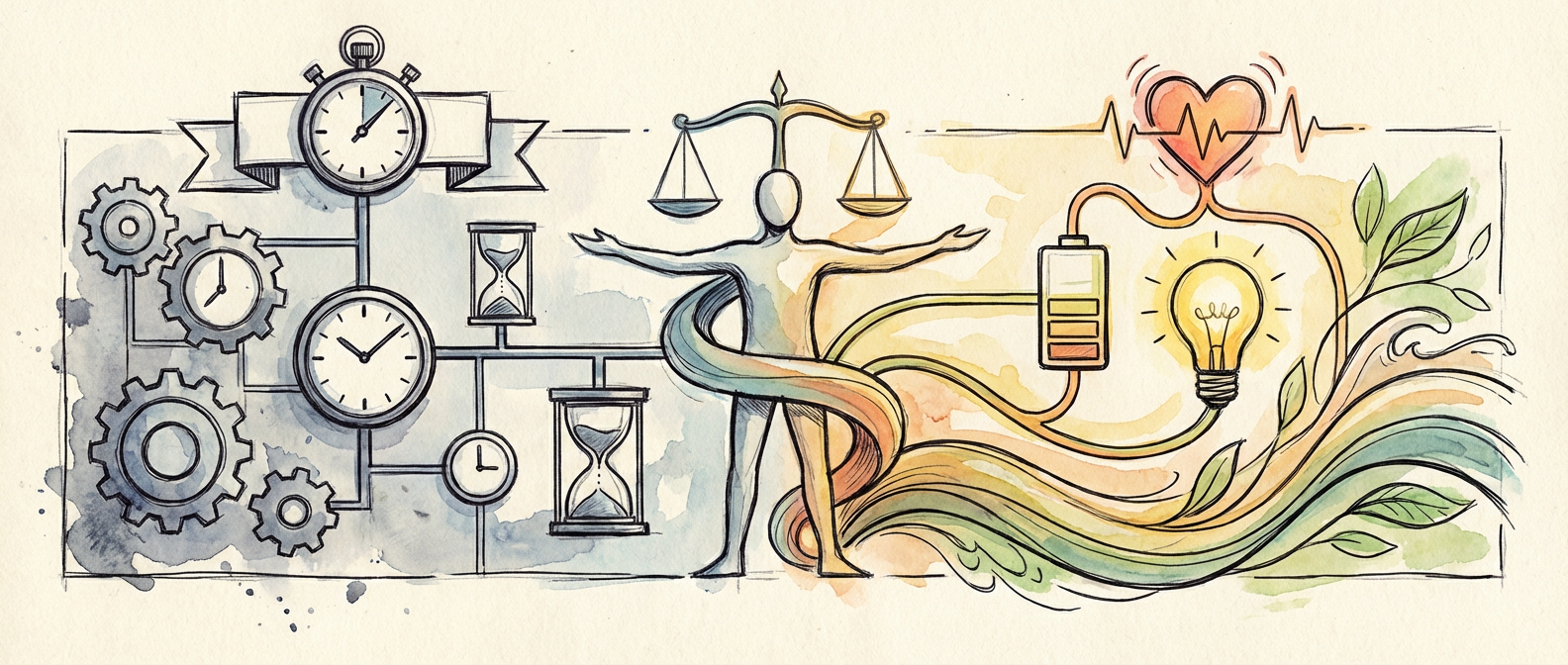
Here’s the uncomfortable truth: time management doesn’t work because time isn’t the real problem. You have the same 24 hours as everyone else. You’re managing the wrong resource entirely.
I learned this the hard way during my spectacular productivity system graveyard phase. I had spreadsheets tracking my spreadsheets. I scheduled bathroom breaks. I was the person who made other obsessive planners uncomfortable. And I was miserable. Constantly behind. Always exhausted. Because I was trying to force my human energy patterns into a machine-like time grid that made zero sense for how humans actually function.

Energy Isn’t Just About Being Tired
When most people hear “energy management,” they think about getting enough sleep and drinking less coffee. That’s kindergarten-level thinking. Your energy operates on multiple levels that most productivity gurus completely ignore.
Mental energy changes throughout the day in patterns that have nothing to do with your carefully blocked calendar. I’m sharpest for complex thinking between 9 AM and 11 AM. My brain turns to mush after lunch. By 4 PM, I can handle emails and admin work, but asking me to write something creative is like asking a dead battery to power a Tesla. Fighting these patterns instead of working with them is why your 2 PM strategic planning session always feels like trying to think through molasses.
Emotional energy is different. Some days you wake up ready to tackle difficult conversations. Other days, dealing with one passive-aggressive email drains your entire tank. Physical energy has its own rhythm too. Here’s the kicker: they don’t always align. You might be mentally sharp but emotionally depleted, or physically energized but mentally scattered.
Most productivity advice treats you like a consistent machine. But you’re not. You’re a complex human with variable energy states, and pretending otherwise is why your beautiful time-blocked schedule keeps falling apart.
The Energy Audit That Changed Everything
For two weeks, I tracked my energy instead of my time. Every two hours, I rated my mental, emotional, and physical energy on a scale of 1-10. I noted what I was doing, where I was, who I was with, what I’d eaten, how I’d slept. It was obsessive and slightly ridiculous, but the patterns that emerged were shocking.
I discovered that my energy crashed hardest not after difficult work, but after meetings with certain people. My most creative thinking happened not during my scheduled “creative time,” but during my walking commute. I could handle five challenging tasks in a row if they were mentally engaging, but one boring administrative task would wipe me out for hours.
The data revealed something big: my energy wasn’t just about rest and stimulation. It was about alignment. When I worked with my natural rhythms instead of against them, I didn’t just get more done. I felt more alive doing it.
This isn’t about optimizing yourself into a productivity robot. It’s about understanding your actual operating system so you can work with it instead of constantly overriding it.
Designing Your Life Around Energy, Not Time
Here’s where this gets practical. Instead of asking “When am I free?” start asking “When do I have the right kind of energy for this task?” It sounds simple, but it requires completely rewiring how you think about scheduling.
I now group similar energy tasks together. Monday mornings are for complex thinking work when my mental energy is highest. Tuesday afternoons are for people-facing tasks when my emotional energy is most stable. Friday mornings are for planning and reflection when I can handle looking at the big picture without feeling overwhelmed.
Here’s the part that makes people uncomfortable: this means saying no to things that happen at the wrong energy time, even when you technically have the time available. It means having conversations about when you schedule meetings based on energy optimization, not just calendar availability. It means admitting that you’re not equally capable at all hours of all days.
I’ve had to explain to colleagues why I don’t take important calls after 3 PM. Why I schedule challenging projects for specific days of the week. Why I block out recovery time after energy-intensive activities, even if nothing is technically scheduled. Some people think this is precious or high-maintenance. Those people are probably running themselves into the ground with their perfectly time-managed exhaustion.
The Uncomfortable Reality of Energy Management
Managing energy instead of time requires accepting some hard truths. You can’t do everything. You can’t be “on” all the time. Your best work happens when you’re energetically aligned, not when your calendar says it should happen.
It also means getting honest about what drains your energy versus what fills it. That networking event that’s “good for your career” but leaves you depleted for two days might not be worth it. That project that looks impressive but slowly crushes your soul needs to be reconsidered. That person who always leaves you feeling exhausted after every interaction, you might need to limit that exposure.
The productivity world sells us the fantasy that we can optimize our way out of being human. That with the right system, we can maintain consistent output regardless of our internal state. This is nonsense, and deep down, you know it.
Energy management isn’t about finding more hours in your day. It’s about using your actual human operating system instead of fighting against it. It’s messier than time management. Less predictable. Harder to explain to people who expect you to be a consistent productivity machine.
But it works. Once you start managing your energy intentionally, going back to pure time management feels like trying to run software on the wrong operating system. Technically possible, but frustratingly inefficient.
What does your energy audit reveal? I’m curious about the patterns you discover when you start paying attention to what actually fuels you versus what depletes you.