The Context Nobody Wanted
January 1st, 2026 hit differently this year. Not because of some Instagram-perfect resolution energy, but because the World Health Organization had essentially nuked the “everything in moderation” narrative we’ve all been living with. The WHO 2026 global alcohol and health report came out swinging with the message that there is no safe level of alcohol consumption. None. Not a glass of wine with dinner. Not a beer on Friday. Not the couple of drinks you thought were fine.
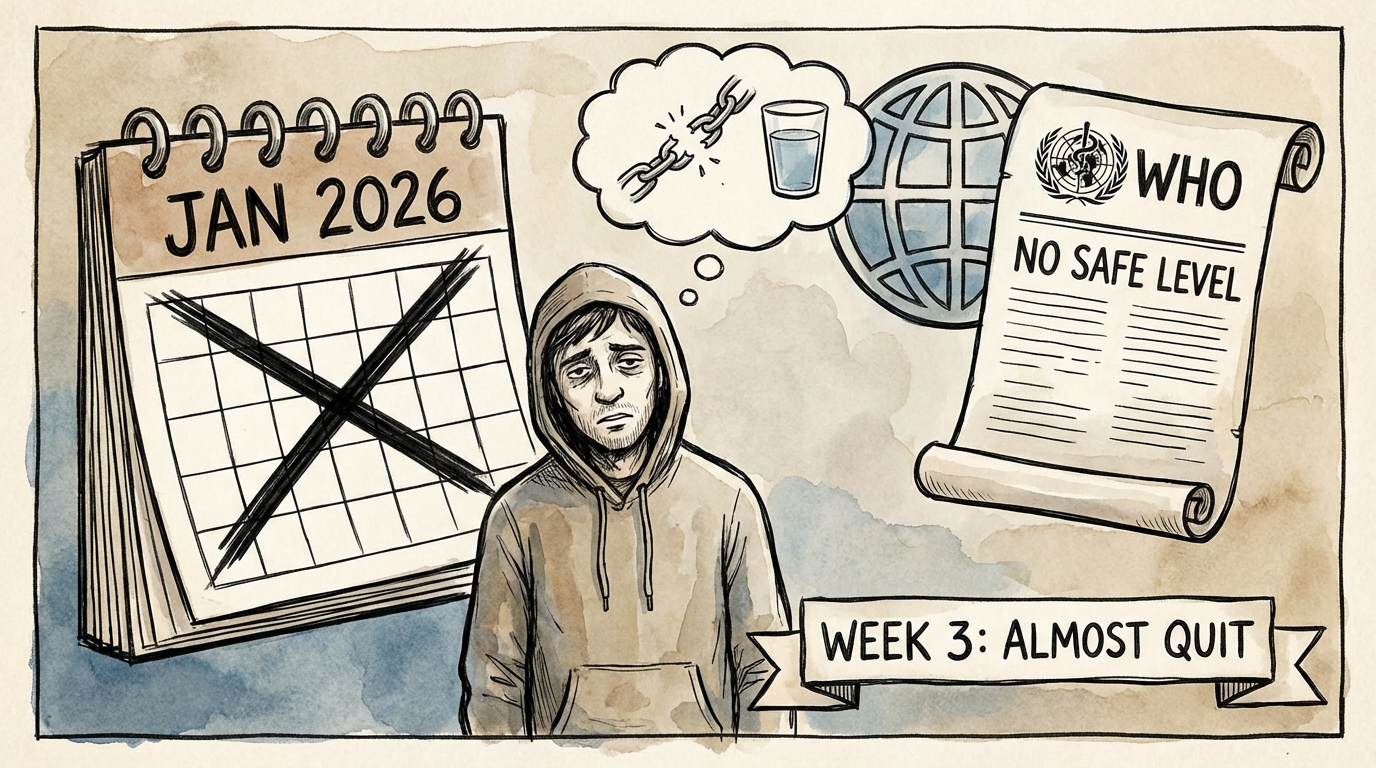
I’d done Dry January before, casually, like a New Year reset that felt manageable. This time felt different. The science wasn’t a suggestion anymore. It was a hard line drawn in the sand.
What I didn’t expect was that 9.4 million people in the UK alone were apparently feeling the same push. Alcohol Change UK’s official data showed record participation numbers for 2026, and honestly, knowing I wasn’t doing this alone made it feel less like deprivation and more like part of something real.
Week One: The Honeymoon Phase (Where I Wasn’t Actually Honest)
Days one through five? Easy. Smug, even. I was the person at the New Year’s gathering with a sparkling water garnished like a cocktail, feeling virtuous. I could already feel my body thanking me. There’s something almost meditative about removing that variable from your day. No “should I or shouldn’t I” debates. No negotiations with yourself at 6 PM.
But here’s what I didn’t tell you: I was white-knuckling it. I wasn’t admitting that Thursday night, when a friend group was planning a wine night, I physically felt the pull to just opt out of the entire friendship that evening. I was replacing alcohol with basically every other dopamine hit I could find. Energy drinks. Extra coffee. Three desserts at dinner. I wasn’t suddenly evolved. I was just redirecting the craving.
The research was actually backing up why this felt manageable early on. Studies showed that moderate drinkers who abstained for a month saw real metabolic wins, including about a 15% reduction in liver fat and measurable improvements in how their bodies handled insulin. My body was already processing that change. My brain was a different story.
Week Two: The Day I Actually Almost Quit
Tuesday of week two. That specific moment. I was exhausted, a project at work had imploded, and I had a genuinely rough day. The kind of day where your brain literally calculates how many drinks would make it all quieter. And instead of the standard “oh I’ll just have tea,” I sat with it. I actually considered just stopping. Not forever, just admitting this was hard and that maybe I wasn’t cut out for a full month.
I didn’t drink that night. But I also didn’t feel noble about it. I felt angry, if I’m being honest. The anger was useful though. It made me realize something: if my first instinct when things got hard was to reach for alcohol, that told me something about my actual relationship with drinking that I’d been politely ignoring.
The non-alcoholic beverage market was apparently banking on people exactly like me having this revelation. Sales of non-alcoholic drinks in the U.S. had exploded by 35% year-over-year in 2025, hitting $682 million. That’s real demand from real people figuring out what their actual preferences are when alcohol isn’t the default. Knowing that the option existed, that I could have a complex, interesting drink that wasn’t just sparkling water or juice, helped bridge that particular night.
Week Three Through Four: The Unglamorous Reality of Following Through
Here’s where I get honest about what “completing” Dry January actually meant. It wasn’t an epiphany. It was stubborn. It was also finding out that your friends have genuinely limited conversation topics when alcohol isn’t lubricating the social machinery. Some social situations got awkward in ways I didn’t anticipate. I had to actually be present for difficult conversations instead of drinking through them.
But something else happened too. By late January, I had this weird clarity. Mornings felt different. My sleep improved. I wasn’t waking up with that low-level cortisol spike of wondering what I’d said or done. The physical stuff was real, and the research backed it up on the metabolic side. The mental shift was bigger than I expected, though.
Here’s the part where the research gets uncomfortable. A study published in the British Medical Journal showed that people who completed Dry January were actually six times more likely to be moderately drinking by August than people who didn’t attempt it at all. Let that sit for a second. Completing the challenge didn’t create lasting abstinence. But it did something possibly more valuable: it reset what “moderate” meant for those people. They came back to drinking with a different relationship to it, not as a daily default but as an intentional choice.
The Unsolicited Recommendation
Do Dry January 2026. But not for the reasons you think. Not because you’re going to become a permanent non-drinker, and not because the WHO told you there’s no safe level. Do it if you’ve been curious about what your actual habits are versus what you think your habits are. Do it if you’re the person who needs to know you can sit with discomfort without numbing it. Do it if your relationship with alcohol has become so unremarkable and automatic that you’ve stopped asking whether it actually serves you.
Do it knowing that week two will be harder than week one. Do it knowing that the social friction is real. Do it knowing you might learn things about yourself that are uncomfortable. And do it knowing that if you make it through, you don’t have to commit to anything permanent unless you want to. But you’ll have actual data about yourself instead of assumptions.
The raw truth? Dry January wasn’t the revelation. It was the honesty that came after. That’s what I’d actually recommend. Not the month of abstinence, but the willingness to actually look at what you’re doing and why.
What’s your relationship with this conversation? Are you thinking about attempting it, or have you done it before? I want to hear about the part that was actually hard for you, not the polished version.