The Pile of Evidence
I keep a drawer full of terrible things I’ve made. Not in some masochistic way, but because these disasters tell the most honest story about how anything good actually gets built. There’s the ceramic bowl that looks like it was shaped by drunk toddlers. The short story that reads like I fed a romance novel into a blender with a technical manual. Three different attempts at a vegetable garden that yielded exactly two edible tomatoes and a lot of expensive compost.
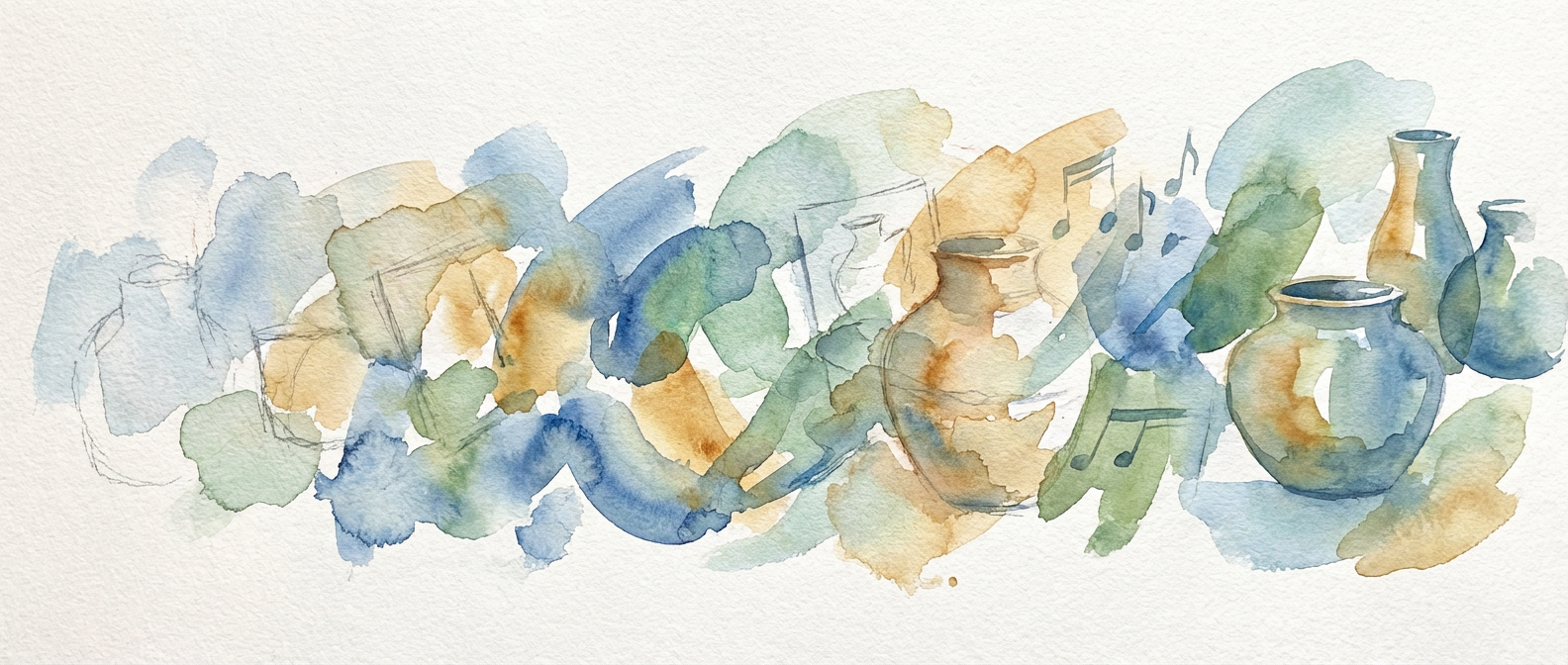
What I’ve started noticing is that the gap between the terrible first attempt and the decent third attempt isn’t what I expected. It’s not about suddenly getting smarter or more talented. It’s about developing a completely different relationship with the process itself. The first time you try something, you’re fighting the medium. By the third time, you’re having a conversation with it.
When the Process Becomes the Teacher
Take my friend Maria, who decided to learn bread making during the pandemic. Her first loaf was what she generously called “a dense brick with artistic aspirations.” But instead of giving up or immediately searching for a better recipe, she did something interesting. She made the exact same recipe again, but paid attention to different things. How the dough felt at each stage. When the smell changed in the oven. What happened to the texture when she kneaded it for different amounts of time.
By the fourth loaf, she wasn’t following the recipe anymore. She was reading the dough. The recipe had become a starting point for a much more sophisticated kind of learning. This is what iteration actually does, it teaches you to see what’s actually happening, not just what you think should be happening.
The same thing happened when I was learning to write decent dialogue. My early attempts sounded like robots having a very polite disagreement. But after writing probably fifty terrible conversations, I started hearing the rhythm of real speech differently. Not because someone taught me the rules, but because I’d failed enough times to recognize when something felt authentic versus when it felt forced.
The Hidden Curriculum of Repetition
There’s something that happens around the seventh or eighth attempt that nobody talks about. You start noticing things that aren’t in any tutorial or guide. The way watercolor paint behaves differently when the paper is slightly damp versus bone dry. How your pasta sauce tastes completely different depending on when you add the garlic. The exact moment in a presentation when you can feel the audience check out.
These micro-observations only come from repetition, and they’re often the difference between something that works and something that works really well. But they’re also completely personal. What I notice about the way paint spreads might be different from what you notice, even if we’re using identical techniques.
This is why watching someone else’s process can only take you so far. You need your own collection of small failures and tiny breakthroughs. You need to build your own internal database of what works, what doesn’t, and what works under which specific circumstances.
The Moment Everything Shifts
I’ve started recognizing a specific moment in the iteration cycle. It usually happens sometime after the initial excitement wears off but before you get genuinely good. You’re making your sixth attempt at something, and suddenly you catch yourself adjusting without thinking about it. Your hands know to add less water before your brain does. You pause in a conversation because something feels off, even though you can’t put your finger on what.
This is when craft stops being about following instructions and becomes about developing judgment. And judgment, it turns out, can only be built through accumulating a lot of specific experiences. Not general experiences. Specific ones. The difference between chopping an onion on Monday versus chopping an onion on Friday after you’ve chopped onions every day that week.
The weird part is that this shift often happens right when you’re feeling most frustrated. Right when the gap between what you’re producing and what you want to produce feels impossibly wide. But that frustration is actually evidence that your standards are improving faster than your skills, which means you’re learning to see quality even if you can’t consistently create it yet.
What the Drawer Actually Contains
Looking back at that drawer of terrible early attempts, I realize they’re not just evidence of failure. They’re a record of learning how to learn. Each awful pottery bowl shows me trying a slightly different approach. Each terrible story draft reveals something I was trying to figure out about character or pacing or voice.
The progression isn’t linear, which is something no one really prepares you for. Sometimes attempt number nine is worse than attempt number five, but in a completely different way. And sometimes that regression is actually progress, because you’re trying to solve a more complicated problem.
What I wish someone had told me earlier is that the goal of iteration isn’t to eliminate failure. It’s to make your failures more interesting. To move from failing because you don’t know what you’re doing to failing because you’re attempting something genuinely difficult. Those are completely different kinds of problems, and they require completely different kinds of solutions.
The craft develops in the space between attempts, in the reflection and adjustment and willingness to try again with slightly better information. And the only way to build that capacity is to actually make the terrible things first. There’s no shortcut around your own learning process, but there’s also no substitute for the satisfaction of finally creating something that works, not because you followed the rules perfectly, but because you’ve developed enough judgment to know when to break them.