The Warning That Made Me Actually Do Something
I’d read the headlines before. Another study, another warning, another think-piece about how social media is ruining us all. I nodded along and kept scrolling. But when Dr. Vivek Murthy issued his formal advisory in June 2023 calling social media a profound risk to youth mental health, something landed differently. Maybe it was the word “formal.” Maybe it was seeing it treated like an actual public health crisis, the way we talk about cigarettes. Then during Congressional testimony in 2025, he doubled down, suggesting warning labels similar to tobacco should be slapped on these platforms. That’s not rhetoric. That’s a doctor saying we need structural change.
I was averaging about two hours a day on Instagram. Not terrible by today’s standards, where the average adult spends two hours and twenty-seven minutes daily on social media overall, up from two hours and sixteen minutes just two years ago. But I noticed the friction. The way I’d open the app to check one thing and thirty minutes would evaporate. The way I’d compare my Tuesday morning mess to someone’s Thursday evening highlight. Nothing catastrophic. Just a consistent, low-level anxiety hum.
So I decided to test the hypothesis. Delete the app. Three months. See what actually happens when you remove the variable.
Week One: The Phantom Pocket Itch
The first week was strange. My thumb knew exactly where Instagram lived. I’d reach for it during coffee, during waiting rooms, during the space between ending one task and starting another. The muscle memory is real. I replaced it with other things, worse things, honestly. I downloaded news apps. I refreshed email obsessively. The urge to fill that micro-gap of boredom hadn’t gone anywhere. I just needed a new container for it.
But something else happened too. I got text messages from actual friends asking what I was up to. Apparently, when you’re not posting the aesthetically curated version of your life every few days, people assume you might actually have time to hang out. I had three in-person plans within the first ten days. That part wasn’t part of the research design. That was just life filling the space.
The research backs up what I started feeling. A landmark 2024 study published in JAMA Network Open found that adolescents who reduced social media use to under 30 minutes daily saw a 19% reduction in depression symptoms over eight weeks. They weren’t quitting cold turkey. They just capped it. The specificity of that finding grabbed me, not just “less is better,” but under thirty minutes actually moved the needle in measurable ways.
Weeks Two Through Eight: The Harder Observations
Around week three, I stopped noticing I was off Instagram. The phantom itch mostly faded. But I started noticing what replaced it. I read books. Actual paper books that required sustained attention. I spent two full Sunday afternoons reorganizing my closet without photographing a single item. I called my mom without it being a birthday or emergency. I noticed my own face more when I was having thoughts, like I’d catch myself mid-catastrophize and actually think about why instead of reaching for distraction.
What I didn’t expect was the clarity about comparison. Meta’s own internal research, surfaced during 2025 Senate hearings, showed that Instagram users spending 5+ hours daily on the platform reported significantly higher rates of body image dissatisfaction. I wasn’t at five hours. But I noticed I’d had this low-level dissatisfaction I’d stopped questioning. Not about my body specifically, but about my whole life-presentation. The version I was editing for consumption. Removing the platform didn’t make me suddenly confident. I’m not pretending it’s that simple. But it removed one specific voice constantly telling me I wasn’t quite matching the standard.
The Surgeon General’s advisory on social media and youth mental health focuses on youth, but I kept thinking about how the architecture of these platforms doesn’t fundamentally change whether you’re sixteen or thirty-six. The engagement mechanics, the comparison triggers, the algorithmic optimization for “stickiness,” it all works the same. Younger brains might be more vulnerable, but older brains aren’t immune.
The Part Where It Got Complicated
Around week nine, I had to think about the real world I actually live in. Instagram is how my small business talks to clients. It’s how I stay loosely connected to people I genuinely like but don’t see regularly. It’s how I found out about a community art project I actually wanted to join. Turns out, three months of principle-standing doesn’t change the fact that I live in an ecosystem where this platform has become infrastructure.
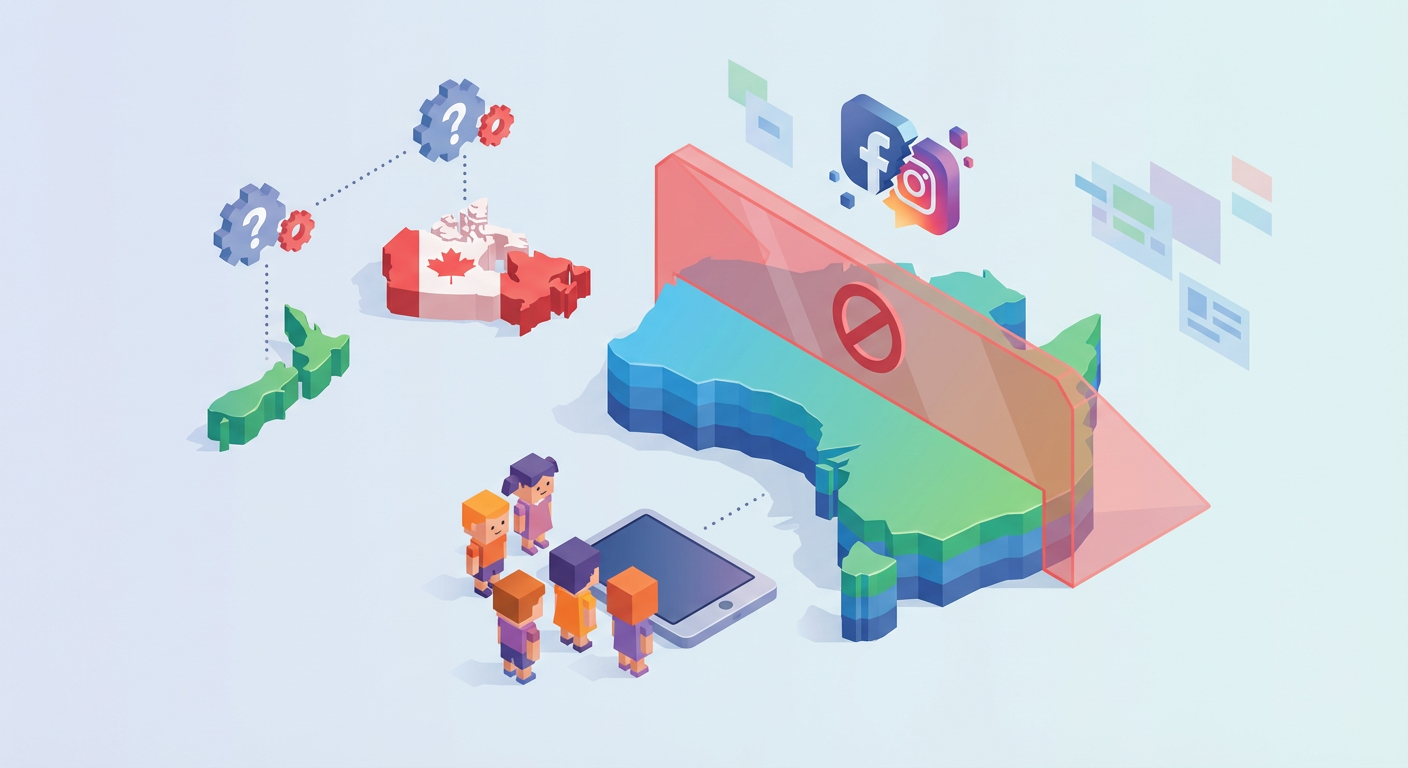
Countries are starting to grapple with this at a policy level. Australia passed legislation in November 2024 banning social media for anyone under 16, the first national law of its kind. New Zealand and Canada are debating similar measures through 2025. These are big structural moves, which suggests the problem isn’t just about individual willpower. When entire governments start legislating, it’s usually because the individual solution isn’t working at scale.
I didn’t stay off Instagram permanently. I reinstalled it around week thirteen. But I did something different. I set app time limits. I log out after every session. I don’t have notifications turned on. I don’t check it first thing in the morning. These are small tweaks that probably sound obvious, but they only felt possible after I’d experienced what the absence actually felt like, not as deprivation, but as space.
What the Three Months Actually Taught Me
The honest report card: I wasn’t cured of anything. I didn’t become a different, better person. But I confirmed something I’d suspected but hadn’t really believed. The platforms are designed to be harder to resist than they need to be. The comparison is intentional. The engagement isn’t accidental. Knowing that didn’t make me want to rage-quit the internet. It just made me want to be more deliberate about when and how I use it.
My baseline anxiety went down. Not disappeared, down. My sense of time got better. My in-person relationships got more actual content. I read more and scrolled less. None of this is surprising. It’s exactly what you’d expect to happen if you removed a tool designed to capture your attention. The surprising part was how long I’d normalized the trade-off without really questioning it.
If you’re thinking about trying something similar, I’m not here to tell you to delete your apps forever. That’s not realistic for how most of us live now. But three months taught me that the warnings aren’t just noise. There’s something worth examining here. What happens when you stop? What fills the space? What do you notice about yourself that the algorithm had been drowning out?
I’m curious what you’d find if you tried it. Not forever necessarily. Just long enough to remember what your own baseline actually feels like.