What Even Is a Dopamine Menu?
Six weeks ago, I kept seeing the same video on my For You page. Different creators, same concept: a spreadsheet or Pinterest board divided into three categories. Appetizers. Main courses. Desserts. Not food. Joy activities, ranked by how much energy they required.
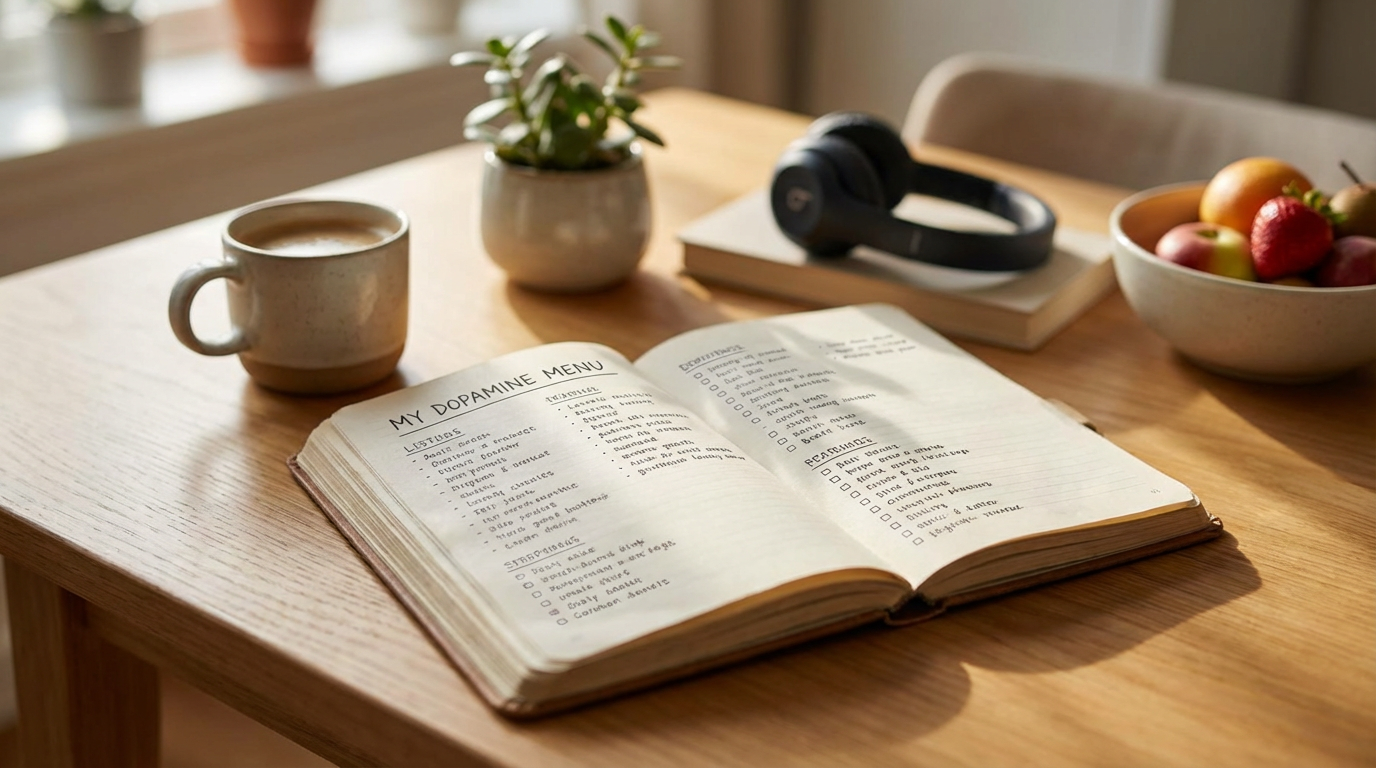
The idea comes from ADHD coach Jaclyn Paul, who basically flipped how we think about pleasure. Instead of waiting until you’re completely depleted and then binge-scrolling for two hours, you build a menu of specific things that light you up—matched to whatever energy you actually have in the moment. Tired? Appetizer. Got 45 minutes? Main course. Feeling ambitious? Dessert.
The hashtag exploded. 620 million views by early 2026. That’s the kind of number that made me skeptical. Any wellness trend that big on TikTok usually means one of two things: it’s either genius or it’s performance masquerading as self-help.
I decided to find out which one it was. In my own life. With an honest notebook and zero filters.
The Setup (And Why I Almost Quit Day Three)
I made my menu on a Sunday afternoon with coffee that was getting cold. Appetizers were the low-barrier things: five minutes scrolling my favorite bookstagram accounts. Listening to one song from that album I love. Texting one specific friend something dumb. Putting on my good lotion.
Main courses required actual planning. A 30-minute walk. Cooking something I actually wanted to eat instead of whatever was fastest. Drawing badly in my sketchbook. Writing actual letters instead of texts.
Desserts were the full-commitment things. Making something new. A long phone call with my mom. Going to that yoga class I kept saying I’d try. Reading fiction for an hour straight.
By day three, I hated it. I hated how artificial it felt. I hated that I had to think about what would make me happy instead of just… knowing. I hated that I kept looking at the list instead of actually doing anything on it. I almost deleted the whole thing.
Then I noticed something: the reason I hated it was because I was treating it like a task. Another thing to optimize. Another way to fail. Which, embarrassingly, proved the entire point of why I needed it in the first place.
What Actually Started to Shift (Week Two Through Four)
Around day five or six, something small happened. I was genuinely fried after work—the kind of brain-dead where even scrolling felt like too much. I looked at the menu. Picked “good lotion and sit somewhere quiet.” Five minutes later I was doing it, and it was the right size for what I had.
No guilt. No doom-scrolling followed by self-recrimination. Just a small, actual good thing that matched my actual capacity.
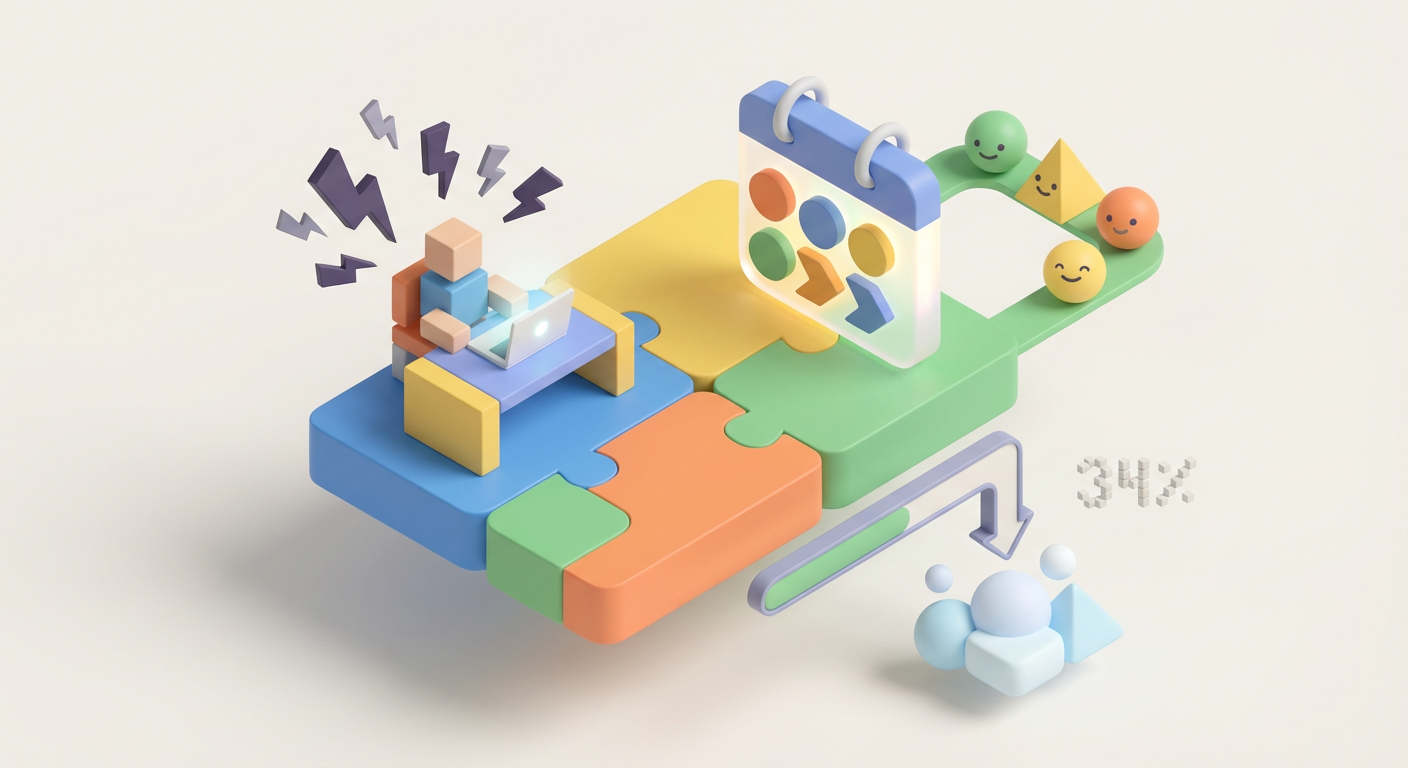
This is where I started tracking what was really happening. Research backs this up—a 2025 study in the Journal of Behavioral Medicine found that intentional positive-activity scheduling reduced burnout symptoms by 34% among remote workers over eight weeks. I was remote. I was burnt out. The mechanism made sense.
But here’s what the research doesn’t capture: the weird psychological relief of permission. Once or twice a week, I’d have a moment where my brain automatically wanted to reach for my phone for a dopamine hit. Instead of white-knuckling through it or feeling guilty afterward, I could think, “Okay, what’s on the menu that actually works right now?” It reframed the impulse from failure into choice.
According to Dr. Anna Lembke on dopamine reset strategies, structured pleasure scheduling can help reset the reward pathways in your brain without relying on passive scrolling. That tracked with what I was experiencing. It wasn’t that the activities were more pleasurable. It was that I was noticing pleasure differently—more deliberately, more actually.
The Part Where It Got Uncomfortable (And Useful)
Week four through six is when I started paying attention to what I was actually choosing. The pattern was clarifying and a little embarrassing.
I was almost never picking the desserts. I kept saying they were “too much hassle” or “I didn’t have time.” But what I was really saying was that my relationship to my own joy had gotten weird. I’d gotten so used to small, quick hits that committing 45 minutes to something I actually loved felt faintly ridiculous.
According to the APA 2025 Stress in America Report, 77% of adults reported work as a significant source of stress, the highest it’s been since 2019. I’m part of that statistic. So are most people I know. And what I realized is that the dopamine menu wasn’t just about scheduling pleasure. It was about giving myself permission to actually want something that took time.
I started moving things around. Added lower-barrier versions of the desserts. “Call mom for 10 minutes” instead of “long phone call.” “One chapter of fiction” instead of “read for an hour.” Not because the shorter versions were better, but because they made the bigger commitment feel less impossible.
By week six, I was doing the desserts maybe twice a week. That sounds small. It’s not.
What Actually Stuck (And What I’m Still Figuring Out)
I’m keeping the menu. Not because it’s a solution—it’s not. It’s a tool. And like any tool, it only works if you’re willing to pick it up.
What stuck: the belief that my joy deserves scheduling the same way my work does. That it’s not selfish or silly. That I’m allowed to be intentional about what makes me feel alive instead of waiting until I’m so depleted I’ll accept any dopamine hit regardless of whether it actually helps.
What I’m still figuring out: how to actually execute this when I’m in crisis mode. When I’m overwhelmed, I still reach for the phone. Still default to scrolling. The menu doesn’t magically fix that. It just makes it slightly more visible when it’s happening, which sometimes is enough to interrupt the pattern.
The honest version? This trend worked for me, but not because it was trendy. It worked because I was ready for something to work. The dopamine menu is just a framework. What matters is what you put inside it and whether you actually use it when you’re supposed to.
If you’re curious about trying this, start small. Pick three appetizers that take under five minutes. The rest will follow. And if it doesn’t work? That’s data too. Either way, you’ve spent some time thinking about what actually brings you joy, and right now, that might be enough.